
A Broken Jaw, a Three-Hour Miracle, And a Second Chance At Life
The following story includes severe abuse and graphic surgical wounds. They may be difficult to see, but we share them to show the reality of cruelty — and the power of compassion to save a life once thought lost.
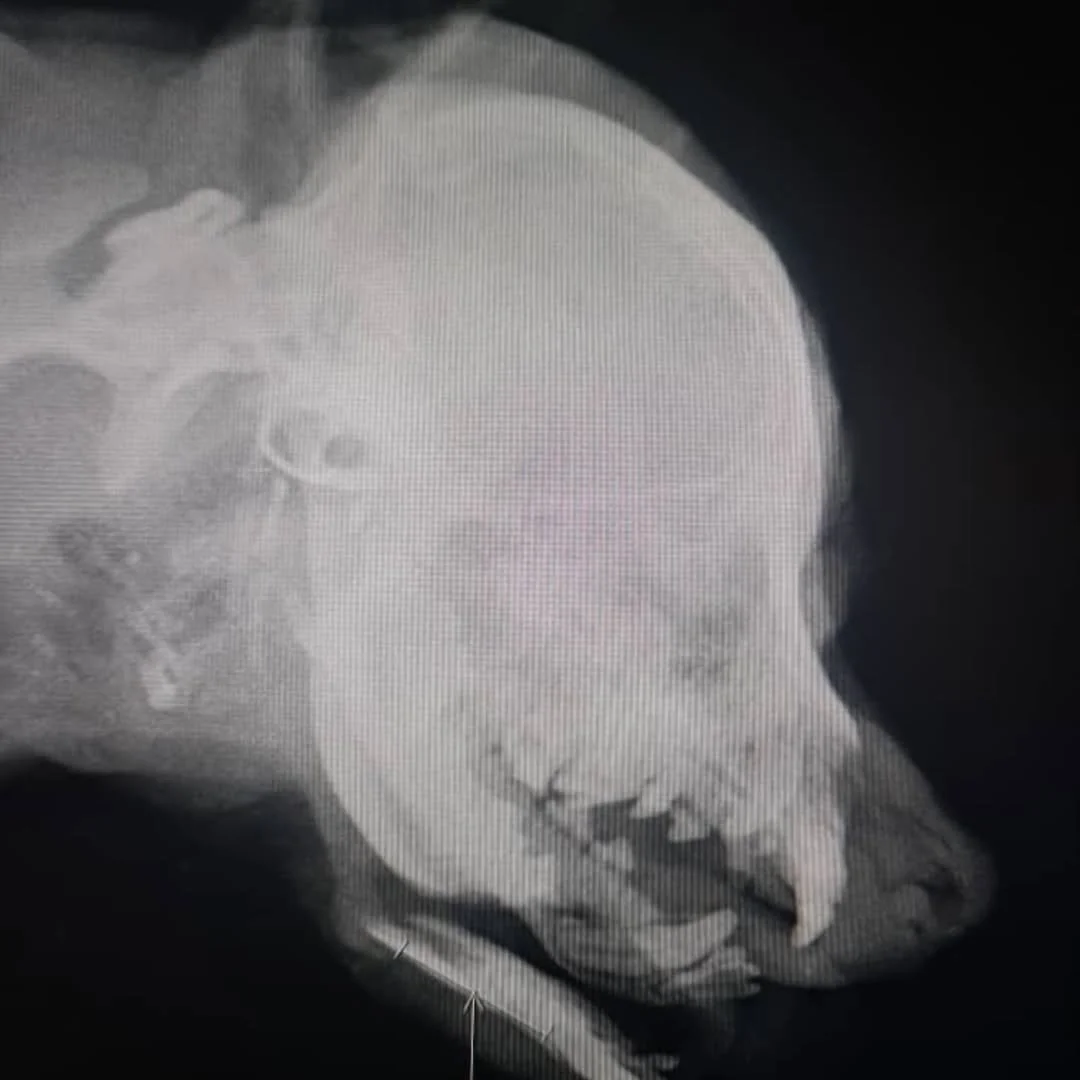
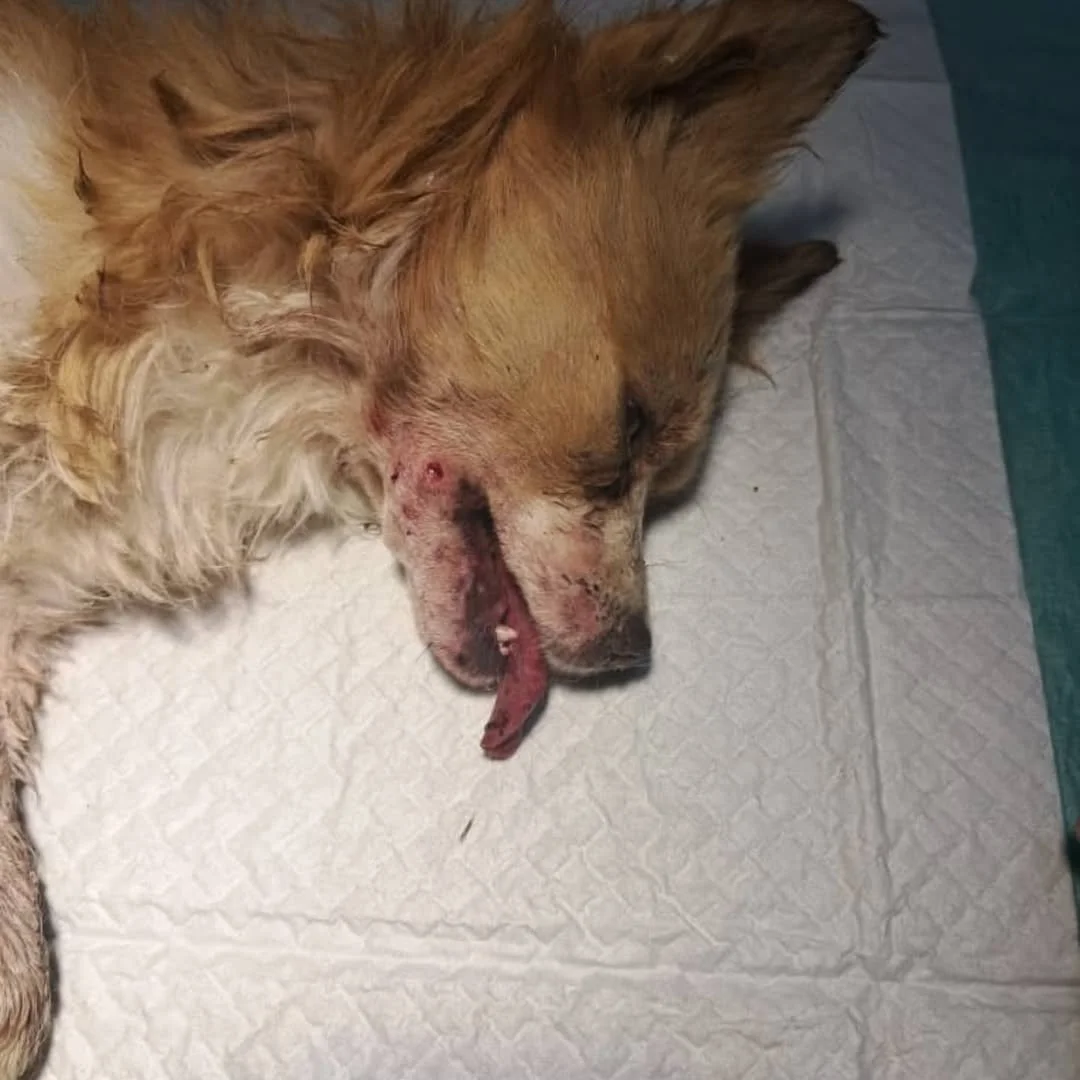
He was found in one of the worst conditions imaginable. Someone had struck him with a shovel, shattering his lower jaw until it hung loose, attached only by torn muscle. Rescuers feared the worst — that his jaw would need to be amputated, or that euthanasia might be the only option to end his suffering.
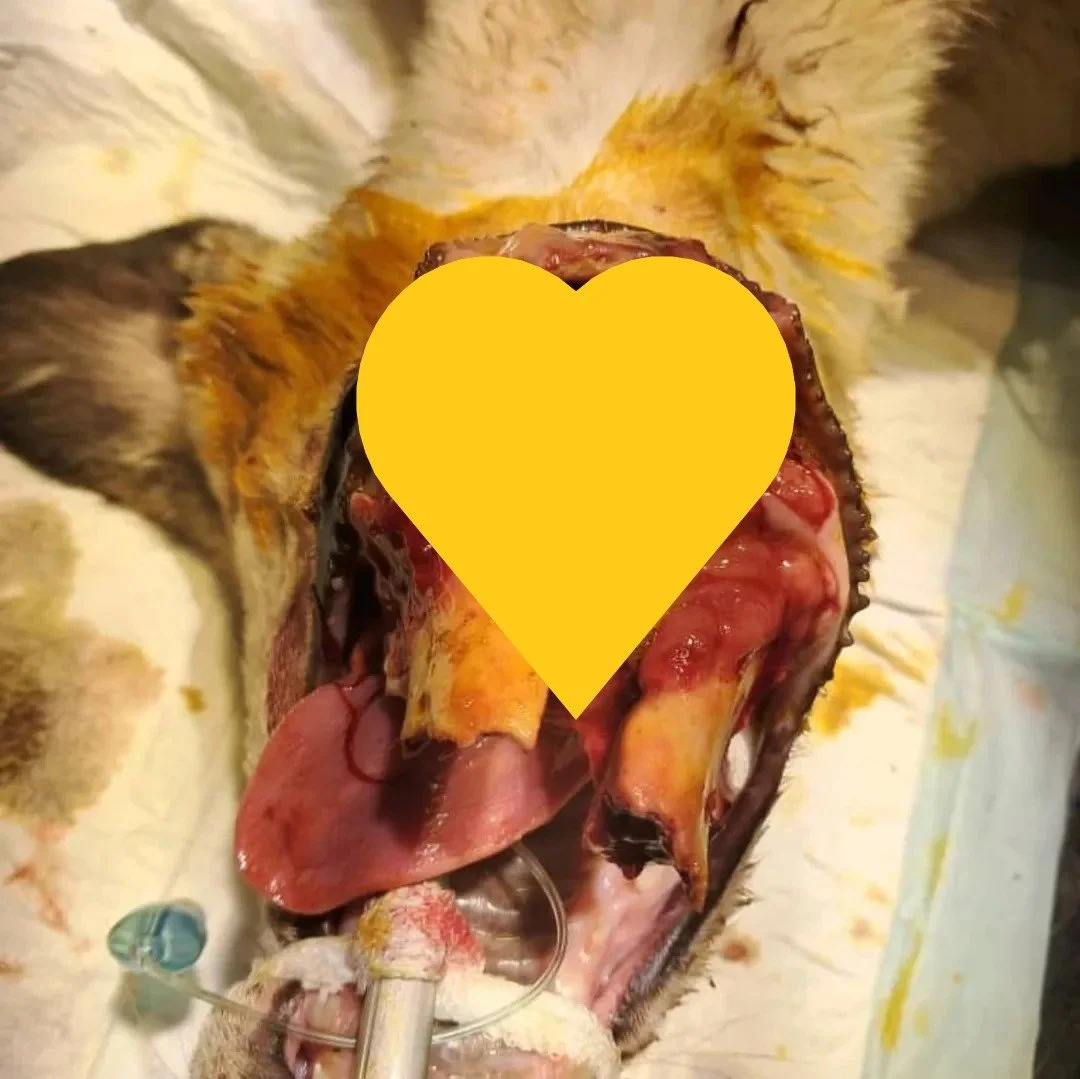
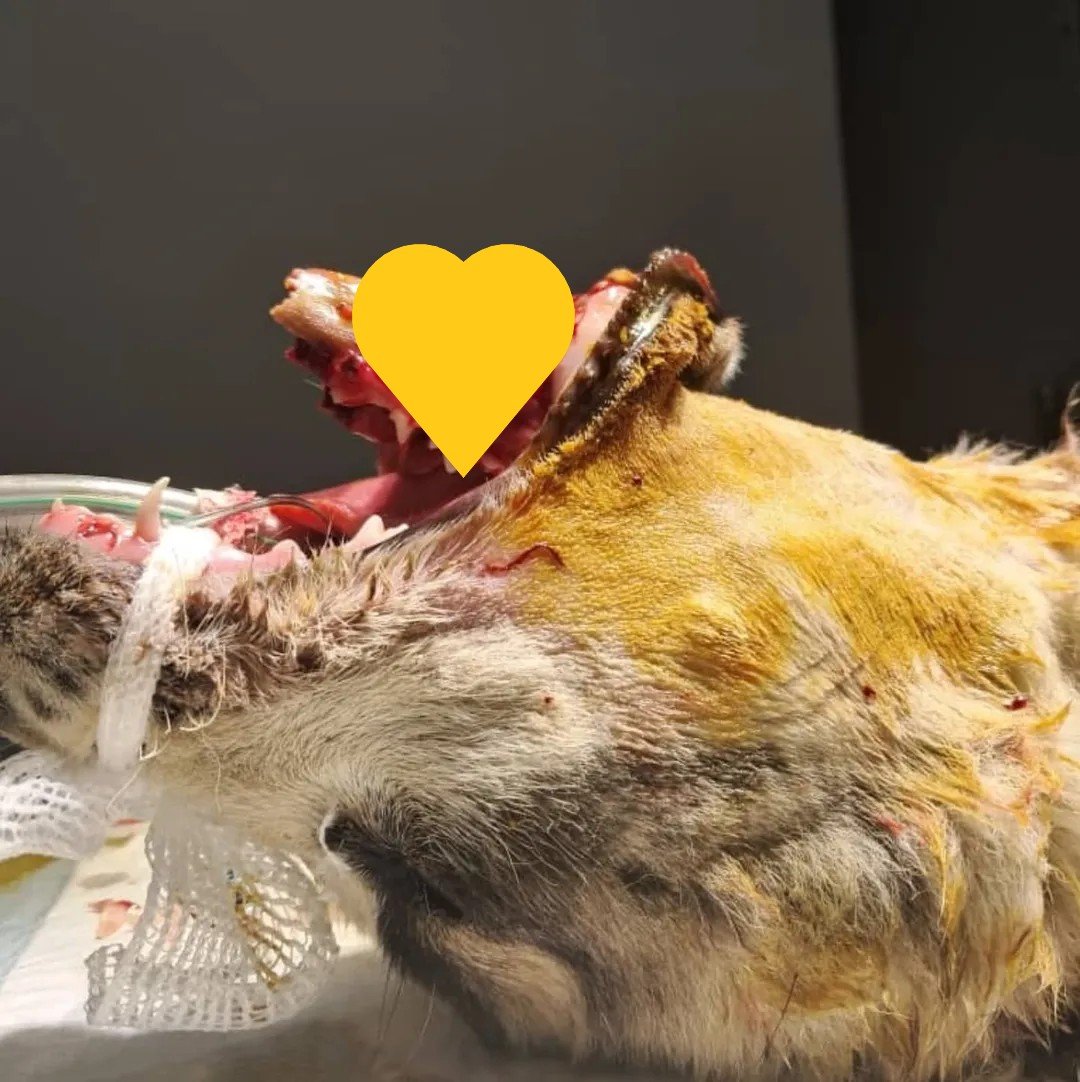
But compassion refused to give up. A skilled veterinarian spent over three hours in surgery, carefully piecing the shattered jaw back together. A week later, a second surgery was performed to stabilize the repair. What seemed impossible slowly became possible.
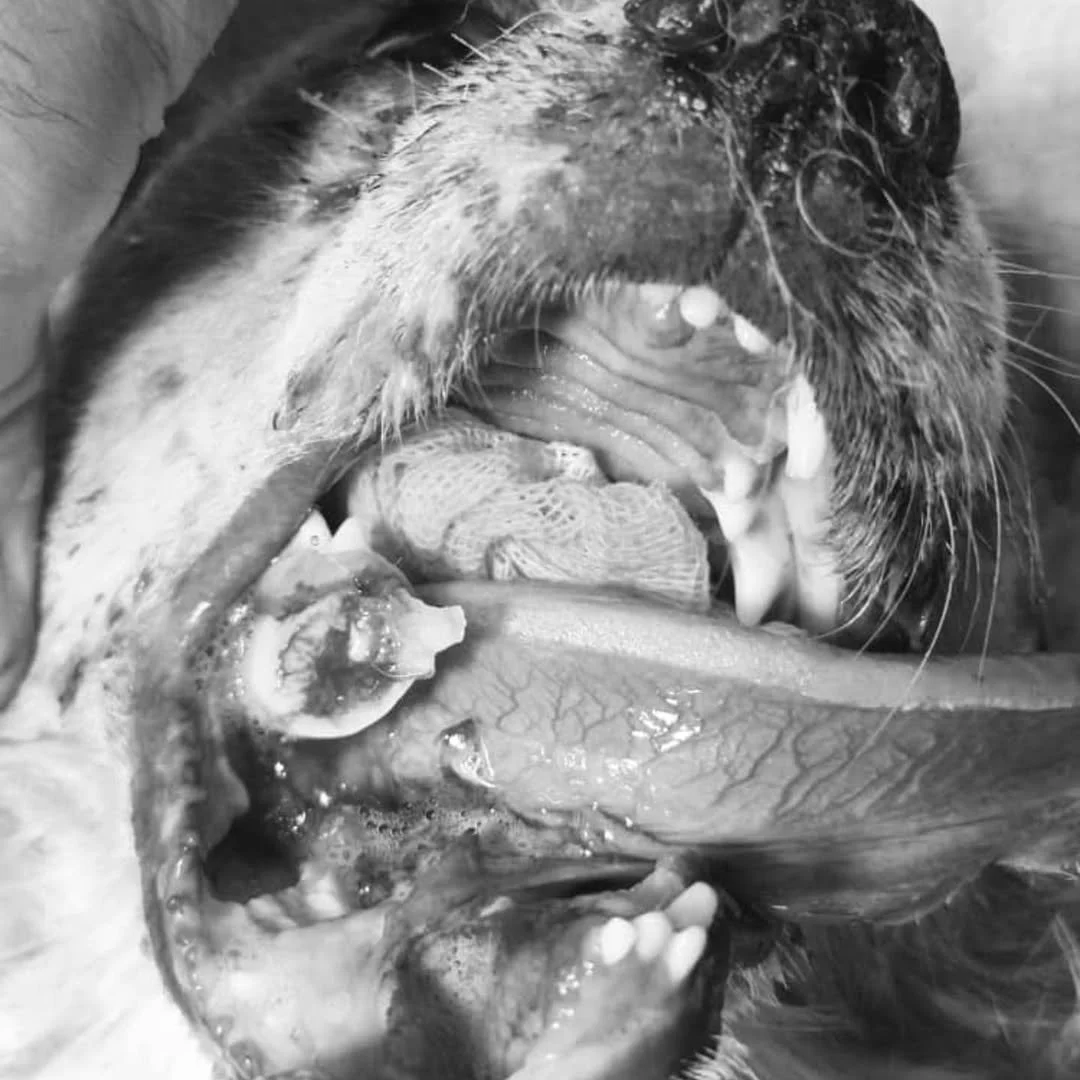
Two days later, the dog everyone thought could never eat again was happily chewing soft food at the shelter. His eyes were bright, his spirit lifted, and for the first time since his rescue, he could eat without pain.
Today, he is safe, recovering, and loved — proof that even in the face of unimaginable cruelty, healing is possible with persistence, skill, and care.
Become His Sponsor
Extraordinary cases like his come with extraordinary costs. From hours of surgery to weeks of medication, recovery, and special food, his survival was only possible because people refused to look away.
Please consider becoming a sponsor for his ongoing care — and for others like him who need both urgent treatment and long-term support.
We would love for you, our supporters, to be part of his journey. Please reach out and let us know what name you think suits this brave survivor best.
His case became more than a single rescue. The three-hour surgery taught the veterinary team a new method to repair severe jaw injuries before they progress to necrosis, amputation, or euthanasia. What was once thought impossible can now guide future treatments — giving other dogs with similar injuries a chance at survival.
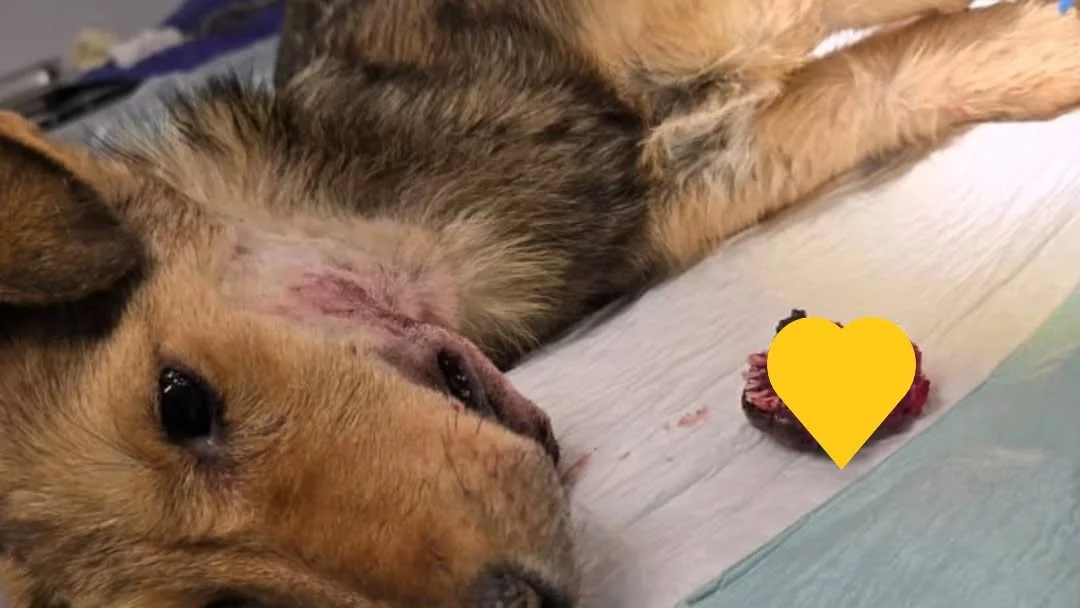
Even when necrosis has already set in, as in this video and the following images, the approach can still allow part of the jaw to be removed minimally while saving as much as possible— preventing full amputation and giving the dog a chance to live.